Posts

Showing posts with the label KMS

The Vital Role of On-Premises Hardware Security Module (HSMs) in Securing Encryption Keys

Image
  Encryption stands as a cornerstone for safeguarding sensitive data within any organization. Complying with data privacy regulations not only shields against data breaches but also enhances an organization's brand value. The robustness of encryption hinges on two key factors: key length and the security of the keys themselves.  Key Length and Security   Key length is a quantifiable aspect determined by encryption algorithms such as AES-128 or AES-256. In contrast, the security of encryption keys is more subjective but equally critical. The more secure the keys—whether private keys in asymmetric encryption or shared keys in symmetric encryption—the stronger the encryption landscape.  The Role of HSMs in Key Security   When it comes to securing encryption keys, Hardware Security Modules (HSMs) are the gold standard specifically those adhering to FIPS 140-3 Level 3 standards, offer unparalleled security.  Overview of HSMs   HSMs are tamper-resistant dev...
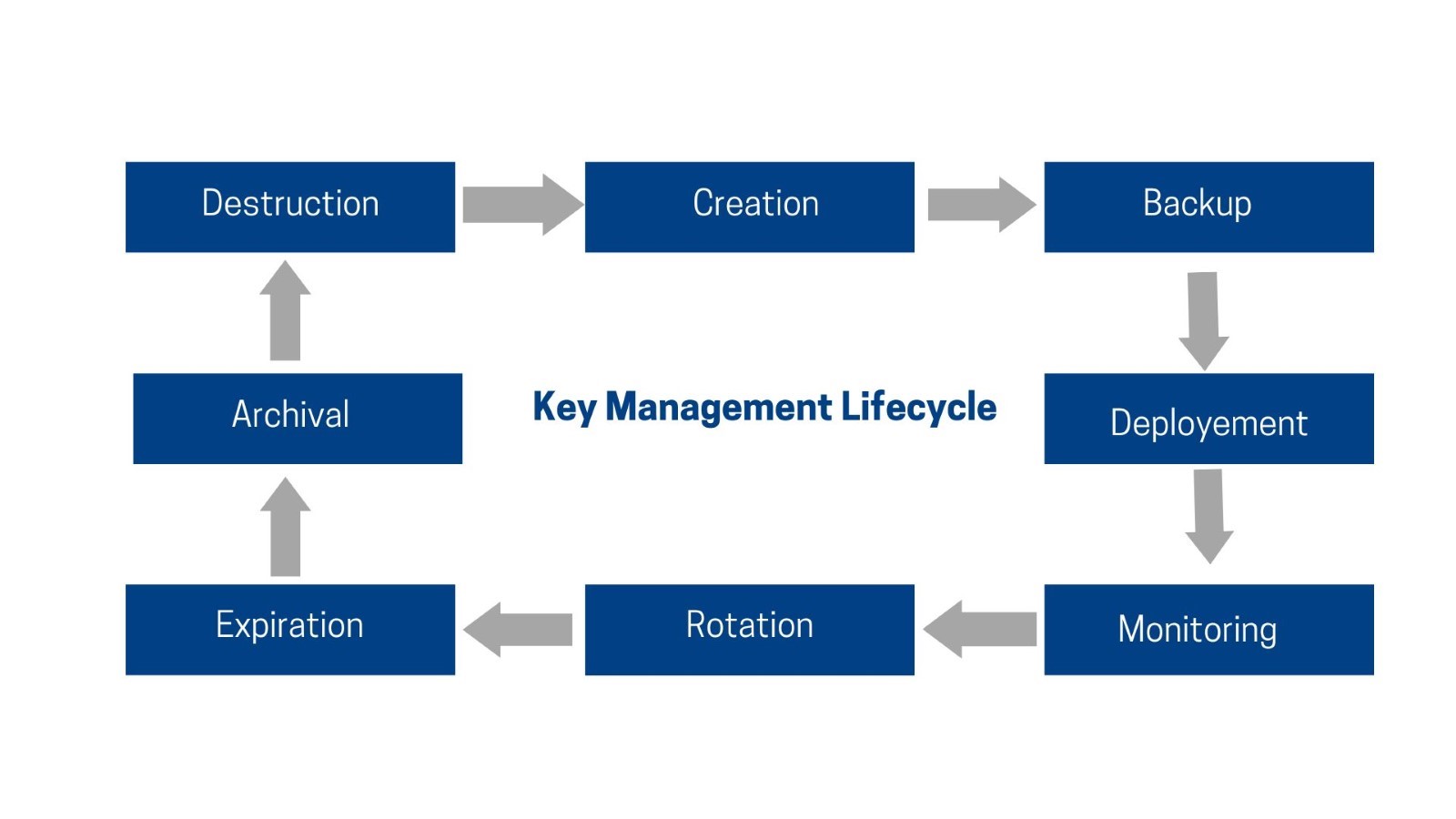
Safeguarding Your Digital Assets: The Crucial Role of Enterprise Key Management Systems

Image
  In today's digital age, the landscape of cybersecurity is complex and ever evolving. Protecting sensitive information and ensuring secure online transactions are paramount. One fundamental aspect that underpins these efforts is Cryptographic Key Management (CKM) . This crucial element in cybersecurity is the backbone for maintaining data integrity, confidentiality, and authentication in an interconnected world.  Understanding Cryptographic Key Management   Cryptographic Key Management refers to the processes and systems used to handle cryptographic keys throughout their lifecycle. These keys are akin to the physical keys that unlock doors, but in the digital realm, they unlock encrypted data. Cryptographic keys are essential in securing digital information, as they are used in various encryption algorithms that protect sensitive data from unauthorized access.  Encryption algorithms typically use two types of keys: a public key and a private key. The public key is w...